
What Is AI Shopping Search? AI shopping search is a way of finding products where an AI system understands the shopper’s full question, compares products from many sources, and gives a direct answer with recommendations. Google AI Overviews, ChatGPT shopping search, and Perplexity all work this way. For ecommerce SEO, your goal is to be one of the products the AI names and cites.
Picture a shopper who types, “best running shoes for flat feet under 120 dollars.” Old search showed ads and category pages. AI shopping search reads reviews, specs, prices, and stock status, then replies with three picks and links. If your store is not one of those picks, you lose the visit before it begins.
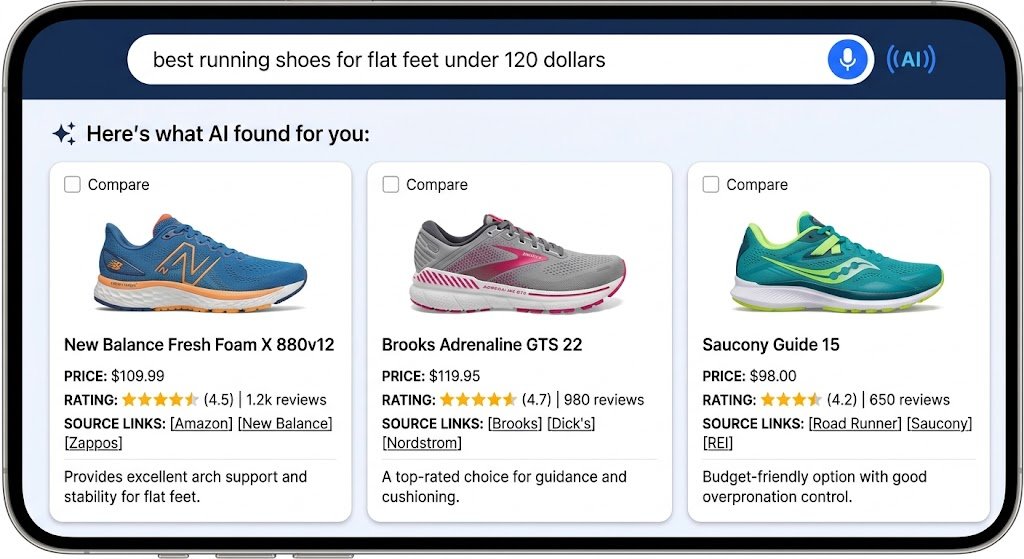
Shoppers no longer type three words and scroll through ten blue links. They ask full questions, and AI replies with a short list of products. That is AI shopping search, and it is already reshaping ecommerce SEO for online stores across the USA.
If you run an online store, this matters right now. Your product page may look perfect in classic Google results, yet an AI engine may skip it because it cannot read or trust your data. This blog explains what changes in 2026 and what you should fix first.
How AI Product Search Actually Works
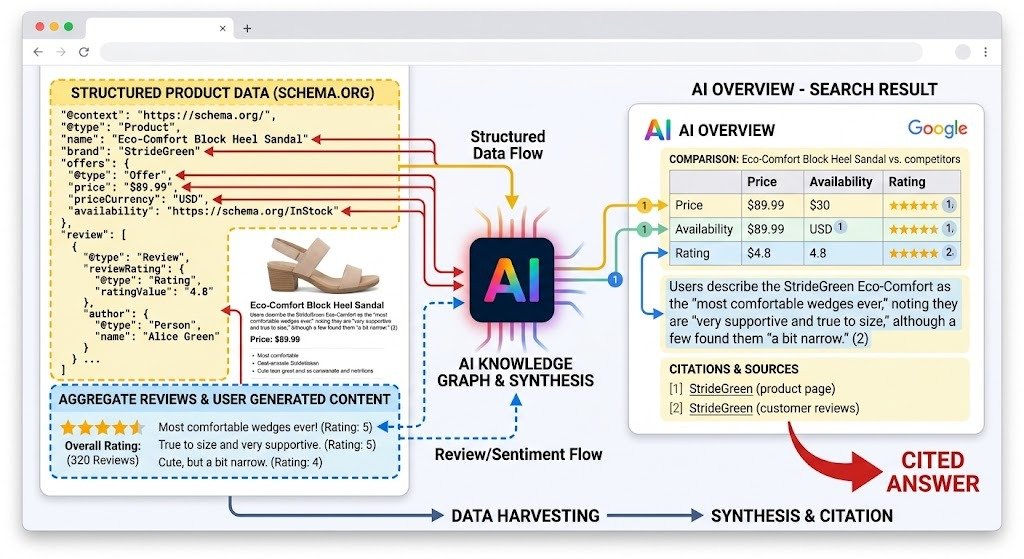
Behind every AI answer sits a simple chain. First, the system reads the question and works out the intent. Second, it pulls product facts from feeds, schema, reviews, and trusted websites. Third, it writes a short answer and cites the sources it trusted most. Google AI Overviews, ChatGPT, and Perplexity all follow this pattern in their own way.
Getting named in that last step is what people call an AI citation. If the term is new to you, this explainer on what an AI citation is shows how engines choose their sources. In ecommerce, a citation often turns into a product mention with a link, which is the new first page of results.
Google started this shift with the Search Generative Experience, and it now shows AI Overviews on many shopping questions. The wider story is covered in this piece on the future of AI in digital marketing. Your store can still win. The rules lean on data quality, trust, and clear answers more than on keyword stuffing.
Why Zero Click Searches Hurt Stores That Wait
Zero click searches grow when the answer sits on the results page. For shopping, the buyer learns the best product, the price range, and the pros and cons without visiting ten sites. Traffic from broad informational terms will fall for many stores. The shoppers who do click are further along, which is why AI Overviews bring a different kind of traffic that often converts better.
That is good news for stores that understand buyer intent. A click from AI shopping search usually comes from someone who already trusts the recommendation. Your job moves from winning every click to winning the right ones, and to being named even when no click happens. Brand mentions inside answers build memory, and memory drives later branded searches.
Plan for three outcomes: a citation with a click, a mention without a click, and no mention at all. Only the first two help you, so your pages must give AI engines clean facts to quote.
Ranking Factors Behind AI Shopping Search
Classic ranking factors still count, but AI engines weigh a few extra signals when they pick products. These are the ones that matter most in 2026:
- Clear product data, including title, brand, size, color, material, price, and availability.
- Reviews that are real, recent, and detailed.
- Brand trust, built from a steady business name, contact details, social profiles, and press mentions.
- Fresh price and stock data that matches your page.
- Direct answers written in plain language on the page.
- A fast, mobile friendly site with an easy checkout.
- Mentions on third party sites such as review pages, forums, and buying guides.
If your basics are weak, start with an on page SEO checklist for 2026 before you try advanced tactics. AI engines still crawl your pages, so titles, headings, and internal links remain the base layer. If you are new to the topic, what SEO is and why it is important gives a simple foundation.
Product Schema and Structured Data Come First
Structured data tells machines what a page sells. Add Product schema with the name, image, brand, SKU, GTIN, price, currency, availability, and review rating. Add Offer, AggregateRating, and Review markup only where you have real data. Organization and FAQ schema support trust and answer extraction. A clean product knowledge graph built from this data helps engines match your item to a shopper’s question.
Think of a schema as a label on a box. Without a label, the AI must guess what is inside. With a clear label, it can place your product in the right answer. Teams that want expert help can explore SEO services in the USA built around technical fixes like schema and crawl health, or look at the wider range of SEO services on offer.
Test every template with Google’s Rich Results Test, and fix errors before you scale to thousands of products.
Product Feeds and Merchant Center Matter More Than Ever
Your product feed is a direct line into Google Shopping and many AI shopping surfaces. Merchant Center optimization means clean titles, accurate prices, real time inventory, strong images, and full attributes such as size, color, and age group. When your feed and your page disagree, products get disapproved and trust drops.
Treat AI shopping search as a data problem first and a writing problem second. Automate feed updates so price and stock sync within minutes. If your team lacks the time, AI automation services can connect your store, feed, and inventory so nothing goes stale. Many owners start small, and this guide to AI marketing for small businesses in 2026 shows where to begin on a tight budget.
Write for Conversation, Not Just Keywords
Shoppers now talk to search the way they talk to a friend. A question like “which standing desk fits a small apartment and holds a 27 inch monitor?” is normal. Conversational search SEO means your pages should answer questions like this in the first lines, in simple words.
Use this pattern on product and category pages:
- Start with a direct answer of 40 to 60 words.
- Add a short comparison table.
- List who the product is for and who should skip it.
- Close with questions buyers ask most.
Answer first, detail after. It works for people and for machines.
Use synonyms and related terms naturally. A store that sells couches should also say sofa, sectional, and loveseat. Semantic product tagging and entity based SEO help engines connect your pages to many phrasings of one need. The post on top SEO strategies for organic traffic shows how to build the topic base around those terms. Long tail shopping keywords like “waterproof hiking boots for wide feet” bring high intent visitors, so give them their own sections or pages.
Tools can speed up drafting. Using ChatGPT for SEO and content creation works well when a human checks every fact, price, and claim before publishing. A list of the top 17 AI tools for SEO in 2026 can also help you pick software for research and tracking.
Visual and Voice Search Change Product Discovery
Visual search lets shoppers take a photo and find similar items. Use sharp images from several angles, clear file names, helpful alt text, and an image sitemap. Show products in real use, not only on white backgrounds. Visual discovery shopping rewards stores that show size, texture, and context.
Voice commerce favors short spoken answers. Write FAQs the way people speak, such as “Is this jacket waterproof?” followed by a one sentence reply. Shoppers will also use AI browsers that read pages and compare products for them, which makes clean page structure more important each month.
EEAT for Online Stores
EEAT stands for experience, expertise, authoritativeness, and trust. AI engines lean on these signals when they decide whom to cite. For a store, that means:
- Real photos and tests of your products.
- Author names and short bios on buying guides.
- Clear shipping, return, and warranty pages.
- Visible contact details and a real business address.
- Reviews from verified buyers.
- Original data, such as your own test results or customer surveys.
Show that you handled the product. A line like “we tested this blender daily for 30 days” builds more trust than ten generic adjectives. Proof also comes from past work. You can browse real client work in the Rayseen project, the Acronimo project, and the Keyfree project to see how clear pages and strong branding come together. The iFit project and the Buena Vista Creative project show more examples, and the full list of case studies adds results behind the work.
How to Get Cited in AI Overviews and AI Answers
Answer engine optimization (AEO), generative engine optimization (GEO), and LLMO all aim at one result: being the source an AI picks. An AEO engine is any answer engine, such as Google AI Overviews, that replies to a question instead of listing links. For ecommerce GEO, publish pages that answer a question completely, back claims with facts, and keep them fresh. The walkthrough on how to get cited by AI and these GEO strategies cover the core ideas in more depth.
These habits raise your chance of a citation:
- Put a direct answer under every heading.
- Use short sentences and plain definitions.
- Add numbers, dates, and named sources.
- Use comparison tables and clear lists.
- Earn mentions on trusted third party sites.
- Update prices, specs, and reviews often.
Perplexity ecommerce SEO often rewards pages that cite sources and show a clear structure. ChatGPT shopping search appears to lean on product data and trusted reviews. Across AI shopping search, the pattern is steady: clean data and trusted content win. Do not chase one engine. Build the base, and every engine benefits. For a broader view of how this fits into your plan, read about AI digital marketing and how it connects search, content, and automation.
Shopify and WooCommerce Setup for AI Search
Shopify AI SEO starts with your theme, apps, and metafields. Make sure your theme outputs Product schema, fill product metafields such as material, size guide, and care steps, and add short intro text to every collection page. On WooCommerce, use a quality SEO plugin, keep product attributes complete, and avoid thin tag pages.
Both platforms need fast hosting, compressed images, and clean URLs. If your store needs a rebuild, web development services can help you launch a faster, schema ready site that AI engines can read with ease.
Programmatic SEO and Dynamic Pages Done Right
Programmatic SEO for ecommerce means building many pages from templates and data, such as “best backpacks for commuters.” Done well, it covers long tail shopping keywords at scale. Done badly, it creates thin pages that AI engines ignore. Every generated page needs unique facts, real reviews, and a useful direct answer. Dynamic product pages should show live price and stock, and you should review a sample of pages by hand each month.
Stores with many cities or branches can pair this approach with a multi location SEO content strategy, so each page serves a real local need. US shoppers often add “near me” to product searches, and local stock data can win those clicks.
Measure What Matters in 2026
Rankings alone no longer tell the full story. Track these signals instead:
- How often AI shopping search names your brand. Test a list of 30 buyer questions each month.
- Branded search growth in Search Console.
- Impressions and clicks on product and category pages.
- Product feed approval rate.
- Conversion rate and revenue per visit.
Conversion rate optimization stays important because you may get fewer visits, and each one must count. Run a full SEO audit every quarter, and use this SEO analysis guide to read the results. For a fast start, a free SEO audit can reveal technical gaps in minutes. Budget questions are normal, and this breakdown of SEO pricing in 2026 shows what to expect.
A 30 Day Action Plan
This plan prepares your store for AI shopping search without a full rebuild.
- Week one: audit product schema, fix errors, and match feed data to page data.
- Week two: add a direct answer, comparison table, and FAQ to your top 20 product pages.
- Week three: improve images, alt text, and review collection. Add EEAT details such as author bios and clear policies.
- Week four: test 30 buyer questions in ChatGPT, Perplexity, and Google. Record who gets cited, then fix the gaps.
Repeat the test every month and keep notes. Small, steady changes beat one big push.
Final Thoughts
AI shopping search will keep growing in 2026, and it rewards stores that are clear, honest, and well organized. You do not need tricks. You need accurate product data, helpful answers, real proof, and pages that machines and people can trust.
Stores that adapt to AI shopping search early will earn the citations that others fight for later. If you run a retail brand and want a team to guide the work, explore how AI marketing in the USA fits your goals, read about our work with retail businesses, see the full range of digital marketing services, or contact Alpha Digital to start with a plan built for your store.
Frequently Asked Questions
What is AI shopping search?
AI shopping search is a way of finding products where an AI system understands a full question, compares products from many sources, and replies with direct recommendations. Google AI Overviews, ChatGPT, and Perplexity all offer it.
How does AI shopping search change ecommerce SEO?
It shifts focus from ranking ten links to being named and cited inside an answer. Product data, schema, reviews, and trust signals matter more, while thin keyword pages matter less.
Will AI shopping search replace Google?
Not soon. Google is adding AI answers to its own results, so most shoppers will use both. Plan for classic search and AI answers together.
How do I get my products cited in AI Overviews?
Use complete Product schema, keep feed data accurate, write direct answers under each heading, show real reviews, and earn mentions on trusted sites.
Does schema markup help with AI product search?
Yes. Schema gives engines clear, labeled facts about price, stock, brand, and ratings, which makes your product easier to match to a question.
What are the best keywords for ecommerce in 2026?
Long tail, high intent phrases that include a use case, a size, a budget, or a problem, such as “waterproof hiking boots for wide feet under 150 dollars.”
The brands ahead in this AI Shopping Search Report did not wait for AI shopping search to become mainstream before fixing their product data. They treated structured feeds, genuine reviews, and direct answer content as infrastructure, the same way a fast website became infrastructure a decade ago, and the traffic numbers behind this report are the result.