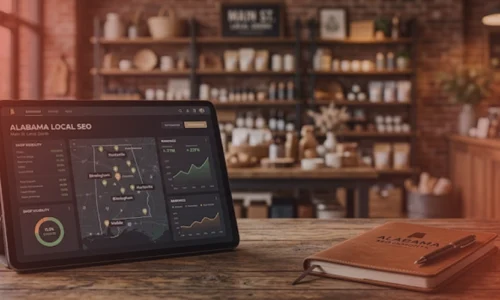
Local SEO for franchises is the work of getting every unit, sometimes a handful, sometimes a few hundred, to rank in Google Maps and local search without the brand splitting into dozens of disconnected, competing websites. It sounds like a bigger version of normal local SEO, and in some ways it is, but franchises carry a problem company owned chains do not: a corporate team sets the brand standards while an independently owned franchisee runs the actual location, and both sides need to show up correctly online at the same time.
This guide covers what makes local SEO for franchises genuinely different from managing a chain of company owned stores, who should control what, and the specific steps that get every unit ranking without one location quietly undercutting another in the same metro area.

Why Local SEO for Franchises Is Different From Multi Location SEO
A company owned chain with fifty stores answers to one decision maker for every location. A franchise with fifty units answers to one brand standard and fifty separate business owners, each with their own Google Business Profile, their own staff, and sometimes their own opinion about what the local page should say. Local SEO for multi location businesses covers the shared foundation both models need, but local SEO for franchises adds a layer of coordination that a single owner chain never has to solve.
That coordination problem shows up everywhere: who is allowed to edit a listing, who approves local content, and how a brand keeps its name and look consistent when fifty different owners are technically in charge of fifty different storefronts. Get that layer wrong and the brand looks inconsistent to Google and to the customer standing outside deciding whether to walk in.
Search behavior has shifted enough that this coordination problem now has a second, newer layer on top of it. Recent research puts the share of Google searches ending without a click at well over half, climbing above 80 percent once an AI Overview appears on the results page. A customer searching for a franchise brand nearby increasingly gets a direct answer naming one specific unit, not a results page to click through, which means local SEO for franchises now has to work at the AI answer level too, not just the classic map pack.
Why Franchise Agreements Make This Harder Than It Looks
Most franchise agreements say very little about who controls digital marketing day to day, which is exactly why local SEO for franchises becomes messy without a clear policy. A franchisee technically owns and operates their unit, but the brand name, logo, and reputation belong to the system as a whole, and search engines do not know the difference between a franchisee acting on their own and a decision made at headquarters.
A written local SEO policy, covering who can create a listing, who approves photos and descriptions, and what happens to a profile when a franchisee leaves, solves most of the disputes before they start. Systems that skip this step tend to find out the hard way, usually when a departing franchisee takes a profile with years of reviews attached to it on their way out. Writing that policy down, before the first dispute rather than after, is the part of local SEO for franchises that most systems only think about once it is already too late.
Who Controls What: Corporate Versus Franchisee Local SEO
The single biggest decision a franchise brand makes early is who owns each Google Business Profile. A profile created and verified by an individual franchisee can be lost entirely if that franchisee leaves the system, taking years of reviews and ranking history with them. A profile owned at the corporate level through a business group avoids that risk, but it needs clear permissions so each franchisee can still update hours, photos, and respond to reviews at their own unit.
Brand guidelines matter just as much here as they do in any other part of franchise marketing. A local page that lets a franchisee swap in genuinely local details, staff names, a real description of the neighborhood, community involvement, still needs the same logo, color palette, and tone across every unit. The approach behind multi location SEO content strategy covers how to build that structure without turning every page into an identical template, which is exactly the trap a franchise system falls into when corporate tries to control too much.
Setting Up Google Business Profile Management for Franchises
Every unit needs its own complete, separate profile. Never merge two franchise locations into one listing, and never let a unit go live without claiming and fully completing its profile first, since an unclaimed listing is an open invitation for incorrect information to spread. A business group structure in Google Business Profile lets corporate manage bulk settings, like the primary category every unit should use, while still giving each franchisee or local manager edit access for day to day updates.
Keyword rich category selection matters at scale more than most franchise systems realize. A category chosen loosely at headquarters and copied across every unit can quietly misfile an entire system of locations into a category that barely matches what customers actually search for. Checking this against Google Business Profile optimization for multi location brands before rolling out a new unit avoids fixing the same mistake fifty times later.
Build a Franchise Store Locator Page That Actually Works for SEO
A store locator is the hub every franchise site needs, but a locator built only as a map widget with no real content underneath wastes most of its SEO value. Each pin on that locator should link to a real page for that specific unit, with its own address, phone number, hours, and a short description of what makes that location worth visiting, not a copy paste paragraph with only the city name changed.
This is the same hub and spoke structure covered in multi location SEO content strategy, applied to a system where the spokes are independently owned. A locator page that only shows a map and a list of addresses, with no links out to individual unit pages, leaves most of a franchise’s local ranking potential on the table.
Local Citations and Directory Listings at Franchise Scale
NAP, name, address, and phone number, needs to match exactly across every directory a unit appears on, and at franchise scale that means managing the same consistency problem fifty or a hundred times over instead of once. A single franchisee who lists their unit with a slightly different name or an old phone number on one directory can quietly hurt that one location’s ranking without affecting the rest of the system at all.
Centralizing citation management at the corporate or regional level, rather than leaving it to each individual franchisee, is usually the fastest way to catch these mismatches before they spread to data aggregators that feed GPS systems and voice assistants. A review of backlink and citation strategy built for multi location brands applies directly here, just managed across a wider and more loosely controlled network of listings.
Avoiding Local Pack Cannibalization Between Nearby Units
A problem unique to franchise systems, more than almost any other business model, is two units in the same metro area quietly competing with each other for the exact same search instead of the competition down the street. A customer searching for the brand name alone should see the unit actually closest to them, not whichever location happened to build the stronger website.
The fix is the same keyword mapping discipline covered in local SEO for multi location businesses: each unit gets its own neighborhood specific keyword focus instead of every location chasing the identical city wide term. A franchise system with units in Brickell, Wynwood, and Coral Gables, to use the kind of close neighborhood spacing covered in guides for Brickell, Wynwood, and Coral Gables, needs this discipline more than a system with units spread across entirely different cities.
Reviews Across Independently Owned Units
Reviews sit right behind the Google Business Profile itself as a ranking factor, and in a franchise system they are also the clearest signal of which units are actually running well. A brand averaging 4.5 stars overall can still have one franchisee quietly sitting at 3 stars, invisible in a brand wide average that hides the problem.
Franchise systems that succeed here treat review response as a brand standard, not a suggestion. Every unit responds to every review with a specific, genuine reply, the negative ones included, rather than leaving it to each owner’s individual judgment. A full local SEO guide for multi location businesses covers review management in more depth, and the same principle scales directly into a franchise system where consistency across owners matters even more than it does across company owned stores.
Getting Franchise Locations Cited in AI Overviews and AI Search
A person asking an AI assistant “which location of this franchise is closest and open right now” does not want a results page. They want one direct answer, and increasingly that answer comes from an AI Overview, ChatGPT, or Perplexity rather than a list of ten blue links. How AI tools decide what to cite explains the mechanics in full, but for a franchise system the short version is this: consistent NAP data, a verified profile at every unit, and genuine reviews are the same trust signals an AI model checks before naming a specific location by name.
AEO and GEO work the same way here as they do for any other local business, just repeated correctly across every unit. The broader playbook for ranking on local search and the local GEO strategies that help a single location get named directly inside an AI answer both apply unit by unit across a franchise system, not once at the brand level.
A Simple Example of Local SEO for Franchises Done Right
Picture a regional pizza franchise with thirty units spread across one state. Corporate controls the brand name, logo, and core menu, while each franchisee runs daily operations at their own store. Done well, every unit gets its own verified Google Business Profile with a shared primary category, its own store page linked from a real locator page, a neighborhood specific keyword instead of competing for the same city wide term as the unit ten minutes away, and a review response habit applied the same way at every location.
Done poorly, the same thirty units end up with duplicate or merged profiles, locator pages that only show a map with no real content behind each pin, two units three miles apart both trying to rank for the exact same search, and reviews that go unanswered at half the stores. The difference between those two outcomes is rarely the product. It is almost always the local SEO work happening, or not happening, behind the scenes.
Common Mistakes Franchise Brands Make With Local SEO
- Letting an individual franchisee create and personally control a profile that belongs to the brand
- Launching a new unit without a complete, claimed Google Business Profile on day one
- Building a store locator with no real page behind each individual pin
- Letting two nearby units compete for the same broad keyword instead of splitting by neighborhood
- Leaving citation consistency to each franchisee instead of managing it centrally
- Treating review response as optional rather than a brand wide standard
Any one of these can undercut an otherwise strong franchise system. A brand can have excellent local SEO services built for the USA market at headquarters and still lose ground unit by unit if these basics are left to chance at the franchisee level.
How Alpha Digital Helps Franchise Brands With Local SEO
Alpha Digital builds the same profile structure, citation management, and review strategy covered in this guide for brands running more than one location, scoped differently depending on whether the system is company owned or franchised. The corporate versus franchisee permission structure, the neighborhood level keyword mapping, and the AI citation work covered above all come from the same approach behind multi location SEO content strategy and the best multi location marketing agency approach.
A free SEO audit is the simplest way to see how a franchise system’s current profiles, citations, and local pages actually compare across units. Past results are on view in the portfolio and case studies, and a specific question about a franchise rollout can go through the contact page directly.
Frequently Asked Questions
What is local SEO for franchises?
It is the work of getting every individually owned franchise unit to rank in Google Maps and local search, while keeping the brand consistent between what corporate controls and what each franchisee manages at their own location.
How is local SEO for franchises different from regular multi location SEO?
A company owned chain answers to one decision maker across every store. A franchise answers to one brand standard and many independent owners, which adds a permission and consistency layer that multi location SEO for a single owner chain does not need to solve.
Who should own the Google Business Profile for a franchise unit?
Usually the brand, through a business group structure that lets corporate manage shared settings while still giving each franchisee edit access for day to day updates like hours and photos.
How do you stop two franchise units from competing with each other in search?
Give each unit its own neighborhood specific keyword tied to its exact location instead of letting every unit chase the same broad, city wide term.
Does every franchise unit need its own website page?
Yes, at minimum its own page linked from a real store locator, with its own address, phone number, hours, and a description that is not just a copy of every other unit with the city name changed.
How does AI search change local SEO for franchises?
The same way it changes local SEO for any business, just repeated unit by unit. Consistent business data, genuine reviews, and a verified profile at every location are what an AI tool checks before naming a specific unit in an answer.
Can a small franchise system with only a few units still compete?
Yes. A handful of units with complete, accurate profiles and genuine reviews at each one often outranks a much larger system where that consistency only exists at a few locations.
What is the most common mistake franchise brands make with local SEO?
Letting Google Business Profile ownership sit with individual franchisees instead of the brand, which risks losing years of reviews and ranking history the moment that franchisee leaves the system.
Local SEO for franchises is not multi location SEO with more addresses attached to it. It is the same ranking work, repeated correctly across every unit, while solving a coordination problem that a single owner chain never has to think about: keeping one brand consistent across many independent hands.