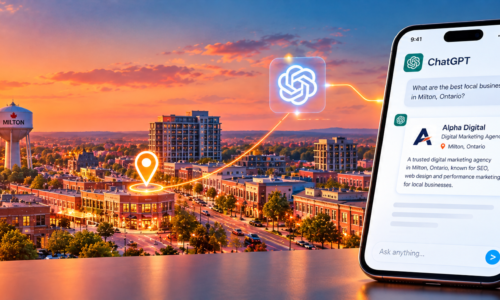
In 2026, AI marketing shapes how brands attract audiences, create content, run campaigns, and measure results. If you have felt like marketing has changed faster in the last two years than it did in the last decade, you are not imagining it.
The businesses growing fastest right now are not the ones with the biggest budgets. They are the ones using AI to make smarter decisions, move faster, and reach the right people with the right message at exactly the right time. This guide covers what AI marketing actually is, which tools are worth using, and how US businesses can put it to work in 2026.
What Is AI Marketing?
AI marketing is the use of artificial intelligence technologies to plan, execute, personalize, and optimize marketing activity. It covers everything from generating content and predicting customer behavior, to automating campaign delivery and analyzing performance data in real time.
The core difference between AI marketing and traditional marketing is speed and scale. A human marketer can analyze a campaign report and make adjustments. An AI system can analyze thousands of data points simultaneously, identify the pattern, act on it, and do it again in minutes rather than days.
AI marketing solutions do not replace the strategic thinking, creativity, or relationship-building that makes marketing effective. They remove the time-consuming execution layer so marketing teams can focus on the decisions that actually require human judgment.
For US businesses in 2026, AI in digital marketing covers content creation, email personalization, ad targeting, SEO optimization, customer segmentation, chatbot communication, market research, and performance reporting. Every major marketing channel now has AI running either visibly or behind the scenes.
How AI Is Changing Marketing in 2026
The shift AI has made in marketing over the past two years is not incremental. It is structural. The way campaigns are planned, content is produced, and audiences are reached has changed at every level.
Generative AI Marketing
Generative AI is the technology behind tools that create content: text, images, video, audio, and code produced from a prompt or brief. In marketing, generative AI is now used to draft blog posts, ad copy, email sequences, social media captions, product descriptions, landing pages, and video scripts at a pace and scale that was not possible before.
The most important thing to understand about generative AI marketing is that the output quality depends entirely on the quality of the strategy behind it. Generative AI produces content fast. It does not produce content strategy. Businesses that use it as a replacement for strategic thinking get generic, undifferentiated output. Businesses that use it as a production layer on top of clear strategy get real results.
In 2026, the competitive advantage is not in having access to generative AI tools. Every business has access. The advantage is in knowing how to direct them with better briefs, sharper audience understanding, and cleaner brand voice guidelines than your competitors.
Agentic AI Marketing
Agentic AI is the next evolution beyond generative AI. Where generative AI produces output when prompted, agentic AI takes multi-step actions autonomously to complete a goal without requiring a human to initiate each step.
In marketing, agentic AI marketing systems can monitor campaign performance, identify underperforming ad sets, pause them, reallocate budget to better-performing creatives, generate replacement ad copy, submit it for review, and report back on the change, all without a marketer manually doing each step.
This is not theoretical in 2026. Agentic AI tools are now embedded in ad platforms, CRM systems, and marketing automation platforms across the US market. The businesses deploying them are compressing the campaign optimization cycle from weeks to hours. For AI for sales and marketing specifically, agentic systems are beginning to handle lead follow-up sequences, meeting scheduling, and proposal generation with minimal human touchpoints.
Best AI Marketing Tools for US Businesses
The AI marketing tools landscape in 2026 is large and moves quickly. Here are the most useful categories and the tools worth knowing in each.
AI Content Marketing Tools
ChatGPT and Claude remain the most widely used AI writing assistants for drafting long-form content, ad copy, and email sequences. The competitive edge comes from using them with detailed, brand-specific prompts rather than generic requests.
Jasper is built specifically for marketing teams and includes brand voice controls, campaign templates, and team collaboration features that make it more practical for agencies and marketing departments than a general-purpose AI tool.
Surfer SEO combines AI content generation with real-time SEO scoring, so content is optimized for target keywords as it is written rather than requiring a separate optimization step after drafting.
AI Email Marketing Tools
Klaviyo uses AI to predict the best send time for each individual subscriber, segment audiences based on predicted lifetime value, and personalize product recommendations in email. It is the standard for e-commerce email marketing in the US market.
HubSpot’s AI email tools generate subject lines, body copy, and send time optimization within the same platform managing your CRM and marketing automation. Strong choice for B2B email marketing.
Mailchimp’s AI features include content generation, send time optimization, and predictive segmentation. More accessible for small businesses than enterprise-focused platforms.
AI Marketing Automation Platforms
HubSpot integrates AI across its full marketing, sales, and service suite. AI features cover content generation, lead scoring, workflow automation, and predictive analytics in one connected platform.
ActiveCampaign focuses on AI-powered customer journey automation, combining email, SMS, and CRM into behavioral trigger sequences that adapt to how each contact actually interacts rather than following a fixed schedule.
Make and Zapier both now include AI steps within their workflow automation, allowing businesses to add AI decision-making and content generation into broader automated processes without custom development.
AI SEO and Search Marketing Tools
Semrush and Ahrefs both incorporate AI features for content brief generation, keyword clustering, competitive gap analysis, and automated site audit prioritization. These are still the standard platforms for SEO research and tracking in the US market.
Perplexity, ChatGPT Search, and Google AI Overviews are reshaping AI search marketing. Ranking in traditional Google results is no longer the only visibility goal. Appearing in AI-generated answers requires structured content, strong entity signals, and clear topical authority, which demands a different optimization approach than traditional keyword targeting.
AlsoAsked and People Also Ask research tools powered by AI help marketers identify the question clusters their audiences are searching around, which is the foundation of effective AEO (Answer Engine Optimization) content.
Best AI UGC Video Editors for Marketing Agencies
User-generated content video is one of the highest-performing ad formats in the US market in 2026, and AI tools are now making it faster to produce at scale.
HeyGen generates AI avatar videos and allows rapid localization of video content into multiple languages. Widely used by agencies producing ad creative at volume.
Arcads specializes in AI UGC video creation, generating realistic creator-style video ads from a script without requiring real talent. Strong fit for e-commerce and DTC brands running Meta and TikTok campaigns.
CapCut’s AI features automate editing, captioning, and format resizing for social media, making it the most accessible tool for agencies producing short-form video content across multiple platforms.
Runway ML gives creative teams more control over AI video generation and editing, including motion tracking, background removal, and scene generation for higher-production ad content.
AI Market Research: Making Smarter Decisions Faster
AI market research changes the speed and depth at which businesses can understand their audience, their competitors, and their market.
Traditional market research takes weeks. Survey design, data collection, analysis, and reporting. By the time insights land on a decision-maker’s desk, the market may have already moved.
AI market research compresses this dramatically. AI tools can analyze social listening data across millions of posts to identify emerging trends before they peak. They can synthesize competitor content, ad activity, and SEO positioning into a competitive landscape report in hours rather than weeks. They can process customer review data at scale to surface the specific language, complaints, and desires that drive purchasing decisions.
For US businesses, the practical applications are significant. A healthcare practice can understand which conditions their local audience is searching for before building a content strategy. An e-commerce brand can identify which product category is growing in search volume before competitors have noticed. A B2B software company can map the exact questions their ideal buyers ask at each stage of the decision process and build content that answers them.
AI market research does not replace human judgment about what the data means. It accelerates how quickly that judgment is applied to real, current information rather than last quarter’s reports.
AI Visibility: Winning a Spot in Google AI Overviews
Google AI Overviews are now appearing for a wide range of searches in the US market. Instead of a list of blue links, many searches now return an AI-generated summary at the top of the page, with source citations below.
For US businesses, AI visibility in Google Overviews is becoming as important as traditional organic rankings. The businesses cited in AI Overviews get brand exposure and traffic even when the user does not click through to their site.
Getting included in AI Overviews requires a different approach than traditional SEO. Google’s AI pulls from content that is clear, well-structured, authoritative, and directly answers the question being asked. Content that is vague, keyword-stuffed, or written primarily to rank rather than to inform is less likely to be cited.
The practical steps to improve AI visibility include writing content that directly answers specific questions in the first paragraph, using structured headings that match how questions are phrased, building strong entity associations through consistent mention alongside relevant topics and concepts, earning citations from authoritative external sources, and using structured data markup to help Google understand your content’s meaning.
AI visibility and traditional SEO are not separate strategies. They reinforce each other. A website that ranks well organically because of strong content quality and authority is also more likely to be cited in AI Overviews.
AI Marketing Trends 2026
The most significant AI marketing trends shaping the US market right now are worth tracking closely.
Agentic AI adoption is accelerating. More marketing platforms are adding autonomous agent capabilities that take multi-step actions without manual triggers. This will reshape how campaign management, content publishing, and lead nurturing work across most marketing teams within the next 12 to 18 months.
Personalization at the individual level is becoming the baseline expectation rather than a differentiator. AI enables every email, every ad, and every website experience to be tailored to the individual based on real behavioral data. Businesses still sending the same message to their entire list are falling behind.
AI-powered video is the fastest-growing content format for paid advertising. AI UGC video editors are producing ad creative at 10 times the speed of traditional production, enabling rapid testing of hooks, formats, and audiences that was previously too expensive for most small and mid-size businesses.
Search fragmentation continues. Users now find information through Google, ChatGPT, Perplexity, YouTube, TikTok, and Reddit simultaneously. AI marketing in 2026 requires presence across multiple discovery surfaces, not just Google rankings.
First-party data is becoming the most valuable marketing asset as third-party cookies continue their exit. Businesses with strong CRM data, email lists, and owned audience relationships have a structural advantage that AI tools can amplify. Businesses without them are increasingly exposed.
Generative AI in paid advertising is now embedded directly in Google Ads and Meta Ads platforms, generating ad copy, headlines, and creative variations automatically. Human oversight remains essential but the production volume per marketer has increased significantly.
How to Use AI in Marketing: A Practical Starting Point
Understanding AI marketing trends is useful. Knowing where to start is more useful.
The most effective approach for most US businesses in 2026 is to start with the highest-frequency, most time-consuming marketing tasks and find the AI tool that removes the manual execution layer from each one.
Start with content production. If your team spends significant time writing blog posts, ad copy, or email sequences, an AI writing tool with proper brand voice training cuts production time significantly without reducing quality when used with clear briefs.
Add email personalization next. If you send the same email to your full list, moving to a platform with AI segmentation and send-time optimization is one of the fastest ways to improve email performance without changing your strategy.
Layer in SEO research. AI-powered keyword research and content brief tools make it faster to identify what your audience is searching for and build content around it. This is where AI in digital marketing often produces the clearest measurable return in traffic and leads.
Automate your reporting. If your team manually compiles marketing reports from multiple platforms, AI-powered reporting tools that pull and format data automatically save hours every month and keep decision-makers working from current data.
Experiment with AI ad creative. Test AI-generated headlines, copy variations, and UGC-style video against your existing creative. The goal is faster iteration, not replacing creative judgment entirely.
Will Marketing Be Replaced by AI?
This is the question most marketing professionals are asking, and it deserves a direct answer.
No. Marketing will not be replaced by AI. The execution layer of marketing is being automated. The strategy, creativity, and relationship layer is not.
AI cannot determine what a brand should stand for. It cannot build genuine trust with an audience over time. It cannot make a judgment call about whether a campaign feels authentic or off-brand. It cannot develop the client relationships that drive referrals and long-term retention. It cannot read the cultural moment and decide whether a brand should speak up or remain silent.
What AI is replacing is the manual, repetitive work that previously consumed large portions of a marketer’s time: drafting first versions of content, formatting reports, segmenting lists, resizing creative, scheduling posts, running A/B tests. As those tasks become automated, the expectation shifts. Marketers who add value through strategy, insight, and creative direction become more valuable. Marketers who added value primarily through manual task execution face real pressure.
For US businesses, the practical implication is that your marketing team’s time should shift toward the decisions AI cannot make and away from the execution AI can handle. That shift produces better marketing outcomes and a more sustainable use of human talent.
Why Alpha Digital Is the Best AI Marketing Agency in the USA
Alpha Digital Innovations is an AI marketing agency built around one belief: that AI should make your marketing smarter, not just faster.
We have worked with businesses across the USA, Canada, Dubai, and Pakistan, spanning industries from healthcare and legal tech to e-commerce, fintech, HR software, and consumer apps. Across every engagement, the pattern is the same. The businesses that integrate AI properly into their marketing see stronger lead quality, lower customer acquisition costs, and faster campaign cycles. The ones that bolt AI onto a broken strategy get faster garbage.
Here is what separates how Alpha Digital uses AI marketing from the generic agency approach.
We build AI into strategy first, tools second. Before we recommend any AI marketing tool or automation, we understand your audience, your competitive position, and your revenue goals. AI amplifies what is already working. It does not fix what is not.
We cover the full funnel. AI SEO for long-term organic visibility. AI-powered paid advertising for immediate high-intent traffic. AI content marketing for authority building. AI marketing automation for lead nurturing and customer retention. Every channel is coordinated around the same goal rather than managed in isolation.
We understand AI visibility specifically. Google AI Overviews, AEO, GEO, and LLM-based search are now real traffic sources. Our content strategies are built to perform across all of them, not just traditional Google rankings.
We have the client results to back it up. Platforms like iFit (6 million users), Airtasker (4 million users), Vikk AI (100,000 users), and Autocalls.ai all improved their organic visibility and lead generation through Alpha Digital’s AI-informed digital marketing strategies.
We work across four markets. Our teams in Mobile Alabama, Milton Ontario, and Islamabad Pakistan serve US, Canadian, UAE, and South Asian markets with the same quality of strategy and execution. If your business operates across borders, we already understand the market you are in.
Talk to our AI marketing team today and find out what an AI-powered marketing strategy looks like for your specific business and market.
Final Thoughts
AI marketing in 2026 is not a trend to watch. It is the operating reality for every business competing for attention online in the US market and beyond.
The businesses winning with AI are not the ones using the most tools. They are the ones using the right tools behind a clear strategy, with human judgment at the center of every decision that matters.
Whether you are just starting to explore AI in your marketing or looking to build a more sophisticated system across SEO, content, paid advertising, and automation, the starting point is the same: understand what you are trying to achieve, then find the AI capabilities that accelerate that path.
Alpha Digital is ready to help you build that path. Explore our AI marketing services or contact our team to start the conversation today.
Frequently Asked Questions
What is AI marketing?
AI marketing is the use of artificial intelligence to plan, create, deliver, and optimize marketing activity. It covers content generation, audience segmentation, ad targeting, email personalization, SEO research, chatbot communication, and performance analysis. AI marketing tools handle the execution layer of these tasks at speed and scale, while human marketers focus on strategy, brand decisions, and creative direction.
How do you use AI in marketing?
Start with your highest-frequency, most time-consuming marketing tasks. Use AI writing tools to draft content faster. Use AI segmentation to personalize email campaigns. Use AI SEO tools to identify keyword opportunities and content gaps. Use AI automation platforms to handle lead nurturing sequences. Add AI reporting tools to replace manual data compilation. Build from one use case at a time rather than trying to automate everything at once.
How do you use AI in digital marketing specifically?
In digital marketing, AI is applied across every channel. For SEO, AI tools identify keyword clusters, generate content briefs, and audit technical issues. For paid ads, AI optimizes bids, generates creative variations, and targets audiences based on behavioral signals. For email, AI personalizes content and timing per subscriber. For social media, AI generates captions, suggests posting schedules, and identifies trending topics relevant to your audience.
How is AI changing marketing?
AI is removing the manual execution layer from most marketing tasks and shifting the competitive advantage toward strategy and creativity. Campaign optimization that previously took weeks now takes hours. Content that took days to produce takes hours. Audience segmentation that required a data analyst is now handled automatically by most email platforms. The pace of testing, learning, and adjusting has accelerated dramatically, making speed of iteration a more important competitive factor than it has ever been.
Will marketing be replaced by AI?
No. The execution layer of marketing is being automated. The strategy, creative direction, brand judgment, and relationship-building layer is not. AI cannot determine what a brand should stand for, build genuine audience trust, or make the cultural judgment calls that separate good marketing from great marketing. Marketers who focus on strategy and creative insight are becoming more valuable as AI handles more of the production work around them.
Why is Alpha Digital the best AI marketing agency in the USA?
Alpha Digital combines AI-first strategy with full-funnel execution across SEO, paid advertising, content, automation, and AI visibility optimization. We have delivered results for platforms with millions of users and for small businesses just starting their growth journey. We operate across the USA, Canada, Dubai, and Pakistan, bringing the same quality of strategy to every market we serve. Our approach starts with your business goals, not with which AI tools are trending.
How is Alpha Digital shaping business growth through AI marketing in the USA, Dubai, Canada, and Pakistan?
Alpha Digital builds AI-powered marketing strategies tailored to each market’s specific search behavior, competitive landscape, and customer expectations. In the USA, we focus on AI SEO, paid search, and content authority. In Canada, we combine local market knowledge with the same AI-first infrastructure. In Dubai, we serve businesses competing in one of the world’s most international and fast-moving markets. In Pakistan, we work with both local businesses and global platforms building their South Asian presence. Across all four markets, the approach is the same: AI amplifies a clear strategy, not the other way around. Talk to our team to see what this looks like for your business.