
A social media manager’s day rarely looks like posting a photo and calling it done. It’s closer to running a small newsroom, customer service desk, and ad agency at once, all before lunch.
The role matters more than most brands give it credit for. A social media manager is often the first impression a customer gets of a company, the person who catches a complaint before it turns into a public review, and the one turning a single idea into content across five platforms. This post walks through what that day actually looks like, hour by hour, plus the tools, skills, and career details anyone considering the role should know.
What Does a Social Media Manager Do?
A social media manager plans, creates, and manages a brand’s presence across platforms like Instagram, Facebook, LinkedIn, and TikTok. The job covers content strategy, day-to-day posting, community engagement, paid ad performance, and reporting on what’s working.
The role has changed a lot in the last few years. It used to be mostly about posting consistently and replying to comments. Now it includes reading platform algorithm shifts, running paid campaigns, briefing designers, and increasingly, working alongside AI tools for content ideas and scheduling. For more on how the job has expanded, see The Responsibilities of a Social Media Manager in the Digital Age and The Evolving Role of a Social Media Manager in the Digital Age.
Inside a Social Media Manager’s Schedule
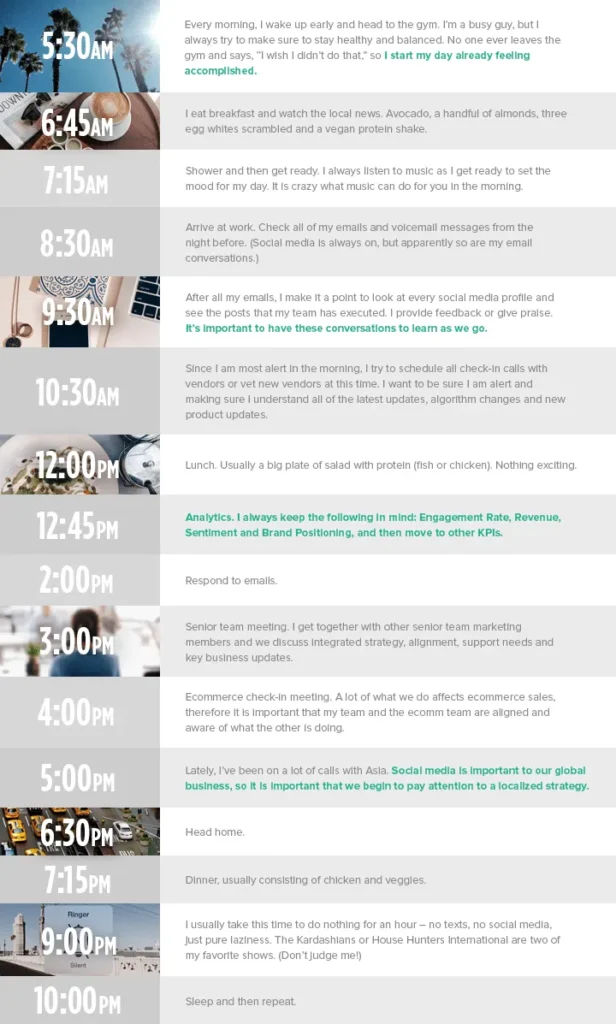
No two days are identical, but most follow a similar rhythm built around four blocks of work.
Morning: Monitoring, Reporting & Trend Checks
The day usually starts with social media monitoring: checking overnight comments, messages, and mentions, then scanning what’s trending on each platform. This is also when most managers pull performance numbers from the day before, so they know what’s working before deciding what to post next. If your monitoring routine includes pulling data from your website too, our guide on in-depth SEO analysis is worth pairing with your social reporting.
Midday: Content Creation & Scheduling
This is usually the biggest block of the day. Social media content creation covers writing captions, briefing or making graphics, filming or editing short video, and loading everything into a scheduling tool for the days ahead. A lot of managers batch this work, creating a week’s worth of content in one or two sitting sessions rather than daily. For a deeper look at building content that actually performs, read Becoming a Pro in Social Media Content Creation to Get Maximum Engagement and Creating Engaging Social Media Content: A Guide to Effective Content Creation.
Afternoon: Community Management & Engagement
Social media community management fills the middle of the afternoon: replying to comments, answering DMs, and engaging with other accounts in the brand’s space. This part of the job is easy to underestimate. A slow or tone-deaf reply to a public comment can do more damage to a brand than a missed post ever could.
End of Day: Paid Campaigns & Performance Review
The day usually wraps with a check on paid campaigns, adjusting budgets, pausing underperforming ads, and reviewing the day’s social media advertising performance against goals. This is also when tomorrow’s priorities get set based on what the numbers showed. See What Makes Facebook an Advertising Powerhouse and How Social Media Advertising Can Skyrocket Your Brand Visibility for more on getting paid social right.
The Social Media Manager’s Toolkit
Social media management tools fall into four main categories, and most managers use at least one from each:
- Scheduling platforms like Buffer, Hootsuite, or Later, for planning and publishing posts in advance across every platform from one place.
- Analytics dashboards for tracking engagement, reach, and conversion, so decisions are based on data rather than guesswork.
- Design tools like Canva or Adobe Express, for producing on-brand graphics without needing a full design team for every post.
- AI content assistants for drafting captions, generating content ideas, and speeding up the first draft of a post before a human edits it.
AI has changed this toolkit fast. See Top AI-Powered Tools for Instagram Growth in 2026 and How AI Is Changing Social Media Marketing and How to Adapt for what’s actually worth adopting.
A Social Media Manager Checklist
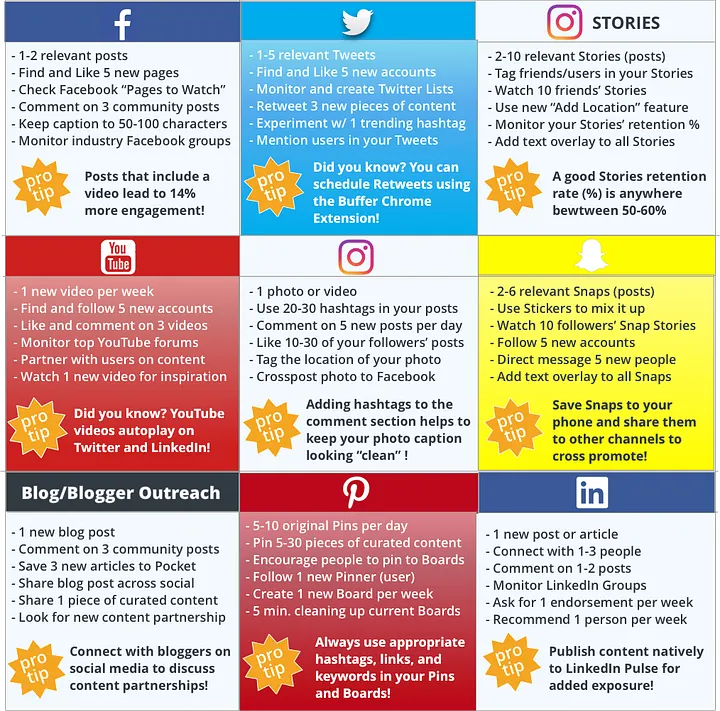
Here’s what the job looks like broken into daily, weekly, and monthly tasks.
Daily tasks
- Check and respond to comments, DMs, and mentions
- Publish scheduled content
- Monitor trending topics relevant to the brand
- Track daily engagement numbers
Weekly tasks
- Plan and schedule the following week’s content
- Review paid ad performance and adjust budgets
- Report key metrics to leadership or clients
- Research trending audio, formats, and hashtags
Monthly or strategic tasks
- Full performance report with insights and recommendations
- Content calendar planning for the month ahead
- Competitor and industry trend review
- Strategy adjustments based on what did or didn’t work
Key Skills That Make a Great Social Media Manager
The social media manager skills that separate a good hire from a great one go beyond knowing how to use each platform. Strong writing matters, since every caption is a small piece of copywriting. So does basic design sense, data literacy for reading performance reports, and enough platform knowledge to know why a Reel and a LinkedIn post shouldn’t sound the same. Just as important is composure, since handling a public complaint calmly, in real time, is part of the job description whether it’s written down or not. See Top Skills for Social Media Marketing Jobs You Need Today for the full list.
How Do You Spend Your Time as a Social Media Manager?
Social media manager time management usually breaks down close to this, though it shifts by industry and team size:
| Task | Share of Time |
| Content creation | 30% |
| Community engagement | 25% |
| Reporting and analytics | 20% |
| Paid campaign management | 15% |
| Strategy and planning | 10% |
Smaller teams often see content creation eat up an even bigger share, since there’s no separate designer or copywriter to hand tasks off to.
In-House Social Media Manager vs. Agency: Which Is Right for Your Brand?
Hiring in-house gives you someone fully immersed in your brand, available daily, and building institutional knowledge over time. It’s usually the better fit for brands with high-volume, always-on content needs.
A social media management agency brings a full team instead of one person: strategists, designers, and ad specialists working together, often at a lower cost than hiring that same team in-house. It’s often the stronger option for brands that need to scale up quickly or don’t yet have the content volume to justify a full-time hire.
Neither option is universally right. It depends on your budget, content volume, and how much day-to-day involvement your team wants. Read How to Choose the Right Social Media Marketing Agency for Your Brand’s Success and Why Social Media Management Is Key to Brand Consistency and Growth to weigh the two against each other, or explore Alpha Digital’s Digital Marketing Services to see how a team approach could work for your brand.
Final Thoughts
A social media manager’s day is busier and more varied than most people expect, blending content creation, customer service, ad management, and strategy into a single role. Whether you’re considering the career path or deciding how to staff the function for your own brand, understanding what the day-to-day actually looks like makes that decision a lot easier.
If your brand’s social presence needs a stronger strategy or an extra set of hands, get in touch with Alpha Digital or request a free SEO audit to see where the biggest opportunities are.
Frequently Asked Questions
What does a social media manager do on a daily basis?
The daily tasks of a social media manager include monitoring comments and messages, publishing scheduled posts, checking trending topics, and tracking engagement numbers from the day before. Most days also involve some content creation, whether that’s writing captions, briefing a designer, or filming short-form video. The exact mix shifts depending on whether a campaign or product launch is underway, but monitoring, creating, and engaging happen almost every day without exception.
What skills do you need to become a social media manager?
Strong social media manager skills include clear writing, basic design sense, and comfort reading analytics dashboards to understand what content is actually working. Platform knowledge matters too, since content that works on TikTok often falls flat on LinkedIn. Beyond the technical skills, composure under pressure counts for a lot, since handling public comments and complaints calmly and quickly is a daily part of the job, not an occasional one.
What tools do social media managers use?
The best social media management tools usually span four categories: scheduling platforms like Buffer or Hootsuite, analytics dashboards for performance tracking, design tools like Canva for graphics, and AI content assistants for drafting captions and generating ideas faster. Most managers use at least one tool from each category rather than relying on a single all-in-one platform, since no single tool does all four jobs equally well. See the toolkit section above for specific picks.
How much does a social media manager typically earn?
Social media manager salary varies widely based on experience, location, and whether the role is in-house or agency-based. Entry-level positions typically pay less than senior roles managing multiple brands or a team of junior managers. Agencies and larger companies in competitive markets tend to pay more than small businesses hiring their first in-house manager, and specialized skills like paid ad management or video editing usually push pay higher.
Is social media management a good career in 2026?
Social media manager career prospects remain strong in 2026, since brands still depend on consistent, high-quality content and fast community engagement to compete online. The role has shifted to include more AI-assisted workflows and data analysis than it did a few years ago, which means the strongest candidates now pair creative skills with comfort using new tools, rather than relying on content instincts alone.
What’s the difference between a social media manager and a social media strategist?
A social media manager vs strategist distinction usually comes down to scope. A manager handles the day-to-day: posting, engaging, and reporting. A strategist works at a higher level, setting the overall direction, choosing which platforms and content types to prioritize, and defining what success looks like. In smaller teams, one person often does both jobs at once.
Should a business hire an in-house social media manager or an agency?
The social media management agency versus in-house decision depends mostly on budget and content volume. Businesses with high daily content needs and the budget for a full-time hire often do better in-house, while businesses that need a full team’s worth of skills without a full-time payroll commitment tend to get more value from an agency. See Alpha Digital’s Digital Marketing Services to see how an agency team could support your brand.