Reporting and Data Integration Use Case
Overview
Reporting and data integration connect multiple business systems into one unified reporting process. Instead of collecting and combining data manually, AI gathers information from different sources and compiles it into a clear report.
This AI integration use case explains how AI pulls data from various tools, processes it, and generates insights automatically. The goal is to reduce time spent on reporting, improve accuracy, and provide faster access to business insights.
The Problem
Businesses rely on data from multiple systems such as CRM platforms, marketing tools, financial software, and analytics dashboards. Each system holds valuable information, but they often operate separately. This makes it difficult to create a complete and accurate report.
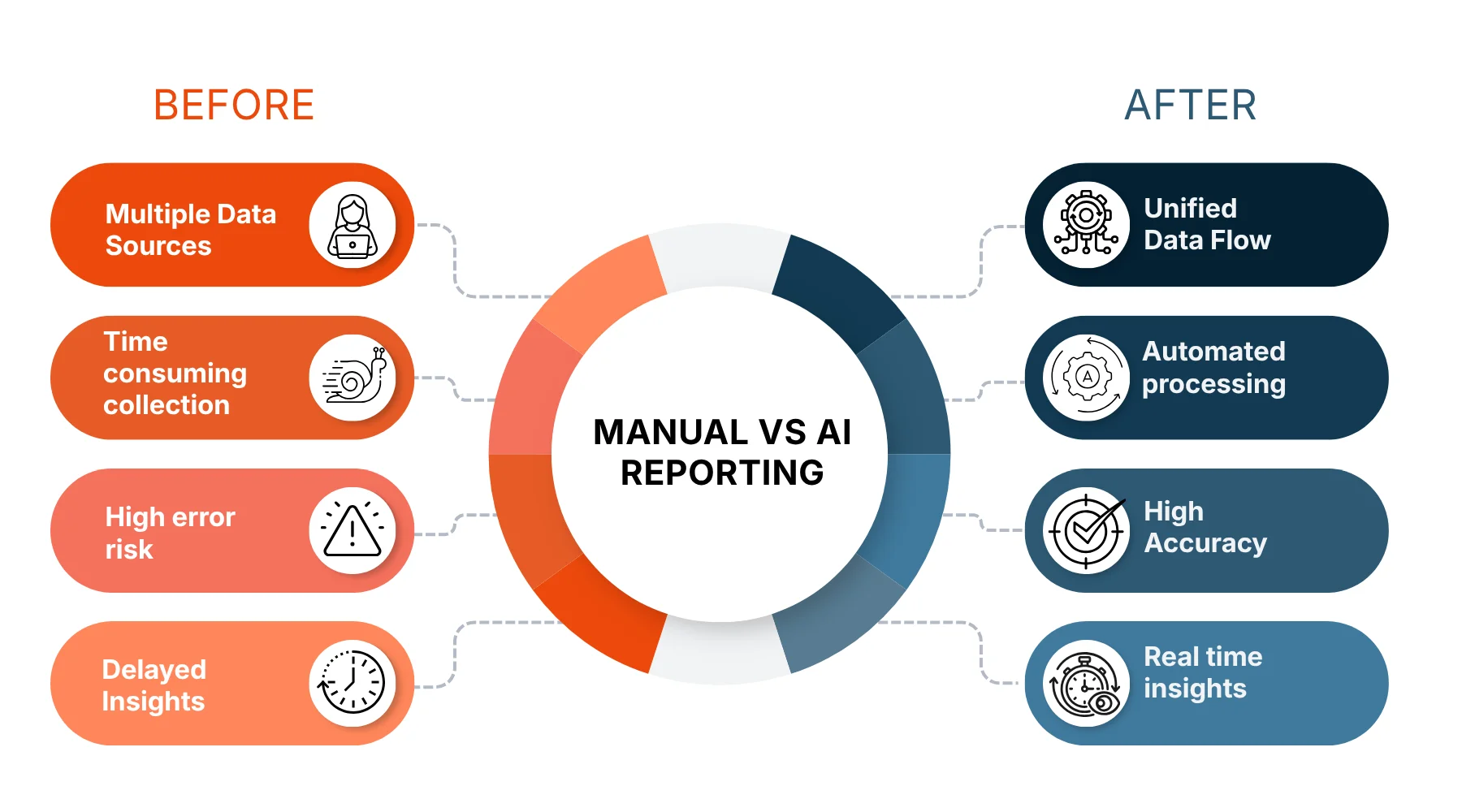
Teams usually need to collect data manually from each system. This involves exporting files, copying data, and combining it into spreadsheets or reports. This process is time-consuming and repetitive. It also requires careful attention to ensure that the data is correct and consistent.
Manual reporting increases the risk of errors. Data may be duplicated, missing, or incorrectly formatted. Even small mistakes can affect the accuracy of the report and lead to poor decision-making. Fixing these errors takes additional time and effort.
Another challenge is the delay in reporting. Reports are often created at the end of a period, which means the information is not always up to date. This limits the ability of teams to respond quickly to changes or make timely decisions.
There is also a lack of consistency. Different teams may use different methods or formats to create reports. This makes it difficult to compare data across departments or track performance over time.
As data volume grows, these problems become more complex. More systems and more data mean more manual work and more chances for errors. This reduces efficiency and prevents teams from focusing on insights and strategy.
The AI Solution
Reporting and data integration create a connected system that collects and processes data automatically. It ensures that reports are generated quickly and consistently.
Trigger
A set time or business event occurs.
AI Action
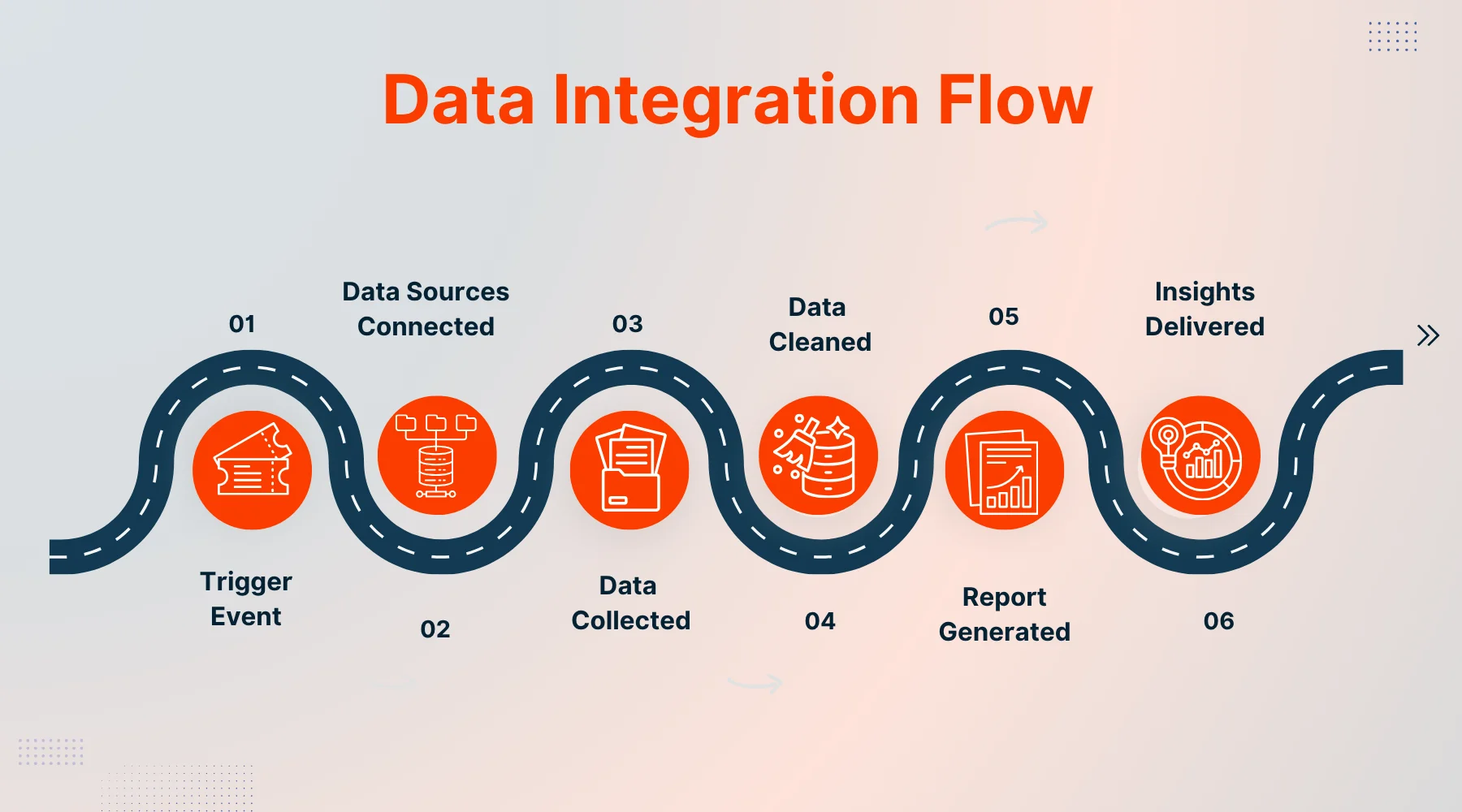
- Identify reporting needs: The system detects the type of report required based on the trigger. It selects the correct metrics, format, and data sources.
- Connect to multiple systems: The AI integrates with CRM platforms, marketing tools, financial systems, and other data sources. It accesses data from all relevant systems.
- Collect and consolidate data: The system gathers data from each source and combines it into a unified dataset. It ensures that all required information is included.
- Clean and validate data: The AI removes duplicates, corrects formatting issues, and checks for missing or inconsistent values. This ensures that the data is accurate and reliable.
- Standardize data structure: The system organizes the data into a consistent format. This makes it easier to compare results across systems and time periods.
- Analyze key metrics and trends: The AI processes the data to calculate important metrics and identify patterns. It highlights changes, trends, and performance indicators.
- Generate the report: The system creates a structured report using tables, summaries, and visual elements. It follows a consistent format for clarity.
- Add insights and summaries: The AI provides clear explanations of what the data shows. It highlights key findings in simple language.
- Deliver the report automatically: The report is sent to the right stakeholders through dashboards, email, or integrated tools. Delivery happens without manual effort.
- Store and track reports: All reports are saved for future reference. The system maintains a history for comparison and analysis.
Outcome
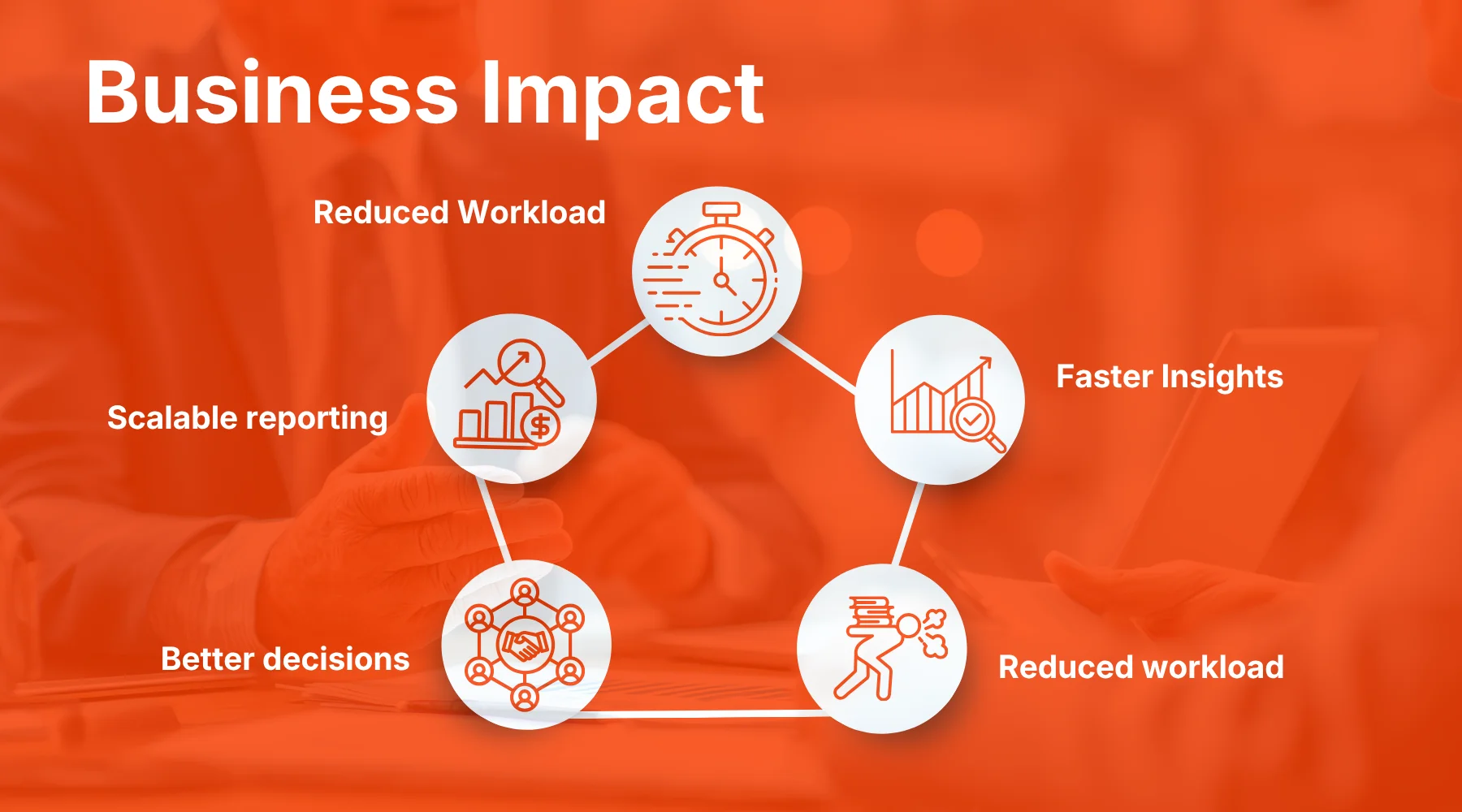
With reporting and data integration in place, businesses can access insights much faster. Reports that once took hours or days to prepare are now generated automatically. This allows teams to make decisions quickly and respond to changes in real time.
Accuracy improves because the system handles data collection and validation without manual input. This reduces the risk of errors and ensures that reports are consistent and reliable. Teams can trust the data and focus on using it effectively.
Consistency is another key benefit. Every report follows the same structure and uses the same data standards. This makes it easier to compare results across different departments and time periods. It also improves communication, as everyone works with the same information.
Time savings have a strong impact on productivity. Teams no longer need to spend hours gathering and organizing data. Instead, they can focus on analyzing insights and planning next steps. This leads to better outcomes and more strategic decision-making.
Real-time or near-real-time reporting becomes possible with this approach. Businesses can monitor performance as it happens and adjust their strategies quickly. This gives them a competitive advantage and supports continuous improvement.
Over time, the system scales with the business. As data sources and volume increase, the process continues to run smoothly without adding complexity. This ensures long term efficiency and growth.
Data Integration Flow
Manual vs AI Reporting
Business Impact
Why Trust This Approach
Reporting and data integration is built on proven data integration and analytics technologies that are widely used across industries. These systems are designed to handle large volumes of data and deliver accurate results.
The system improves over time by learning from past reports and user preferences. It becomes better at selecting relevant data and presenting insights that matter most. This increases its effectiveness and value.
Transparency is a key feature. Users can see how data is collected, processed, and presented in each report. This builds trust and ensures that insights are based on clear and verifiable data.
Security is also an important part of the system. Sensitive business data is protected through controlled access and secure handling practices.
Many organizations have adopted reporting and data integration and have seen improvements in speed, accuracy, and decision making. These results show that the approach is practical and effective.
Conclusion
Reporting and data integration transforms how businesses manage and use data. It replaces manual and time consuming processes with an automated system that works quickly and accurately.
By connecting multiple systems and generating reports automatically, the system ensures that insights are always available when needed. This helps teams make better decisions and respond faster to changes.
The benefits go beyond efficiency. Businesses gain clearer visibility, improved consistency, and stronger control over their data. This supports growth and long term success.
As data continues to grow, having a scalable reporting system becomes essential. AI powered integration provides a reliable solution that keeps reporting fast, accurate, and easy to manage.
In simple terms, it helps businesses turn data into insights faster and with less effort.