Marketing and Sales Integration Use Case
Overview
Marketing and sales integration helps businesses connect lead generation with follow-up and conversion. Instead of managing marketing platforms and CRM systems separately, AI ensures that lead data flows smoothly between both.
This AI integration use case explains how AI captures engagement data, syncs it across systems, and supports faster and more effective follow-up. The goal is to improve conversion rates and create a more aligned sales process.
The Problem
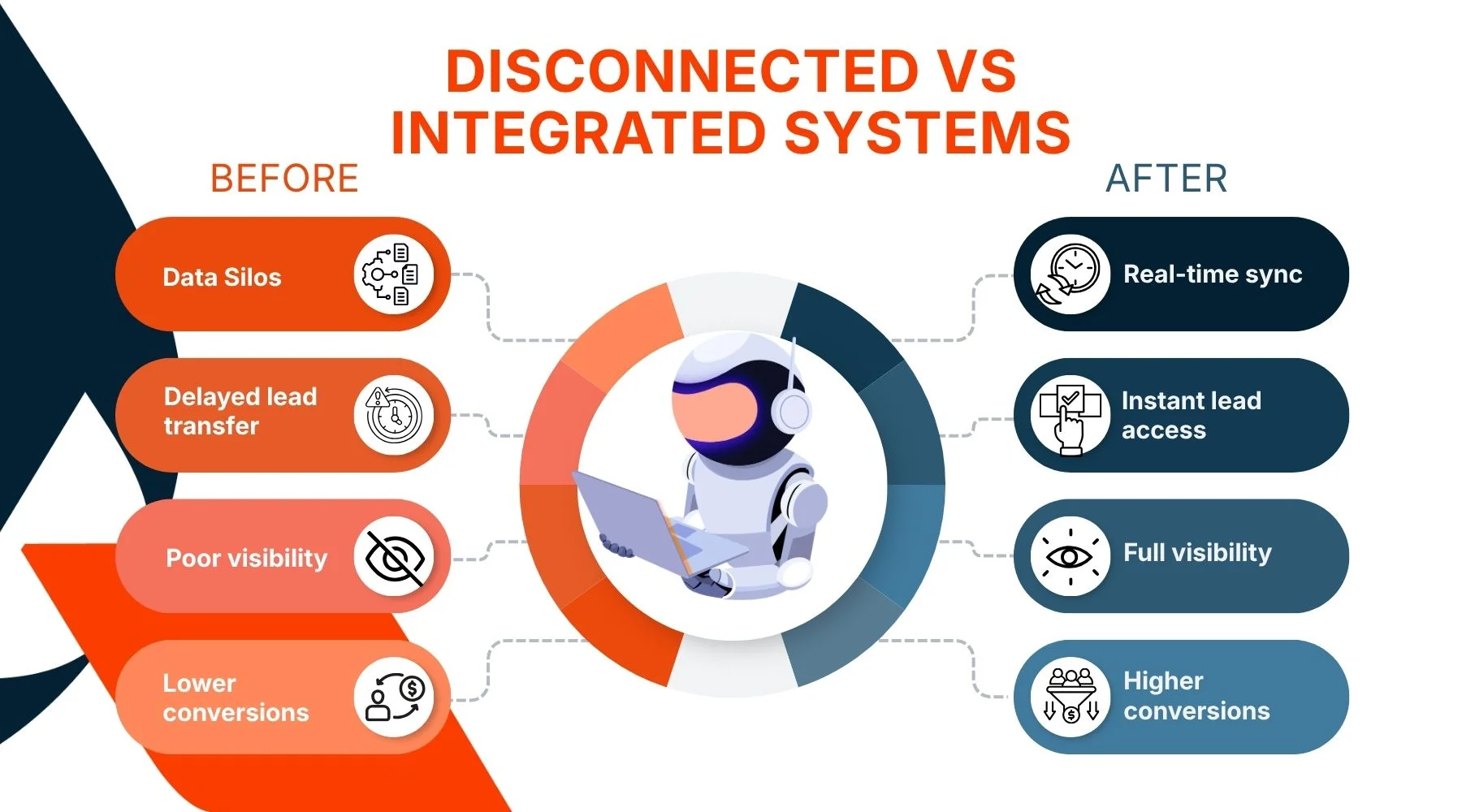
Marketing and sales teams often work with different tools and systems. Marketing platforms handle campaigns, ads, and lead generation, while sales teams rely on CRM systems to manage prospects and close deals. When these systems are not connected, it creates gaps in data and communication.
Leads generated through campaigns may not be transferred to the CRM immediately. This delay can reduce the chances of successful follow-up, especially when interest is high. In some cases, leads may be lost or overlooked entirely.
Manual data transfer is another challenge. Teams may need to export data from marketing tools and import it into the CRM. This process takes time and increases the risk of errors such as missing details or duplicate records. Over time, this leads to poor data quality and confusion.
There is also limited visibility into lead activity. Sales teams may not have access to information about how a lead engaged with a campaign, such as which pages they visited or which emails they opened. Without this context, it becomes harder to personalize communication and build strong relationships.
Inconsistent data also affects decision-making. Marketing teams may not know which leads convert into customers, while sales teams may not know which campaigns generate the best results. This lack of alignment reduces overall performance and limits growth.
As lead volume increases, these issues become more difficult to manage. More campaigns and more leads mean more manual work, more delays, and more missed opportunities.
The AI Solution
Marketing and sales integration creates a connected system where lead data flows automatically between platforms. It ensures that every interaction is captured and used effectively.
Trigger
A user submits a form or engages with a campaign.
AI Action
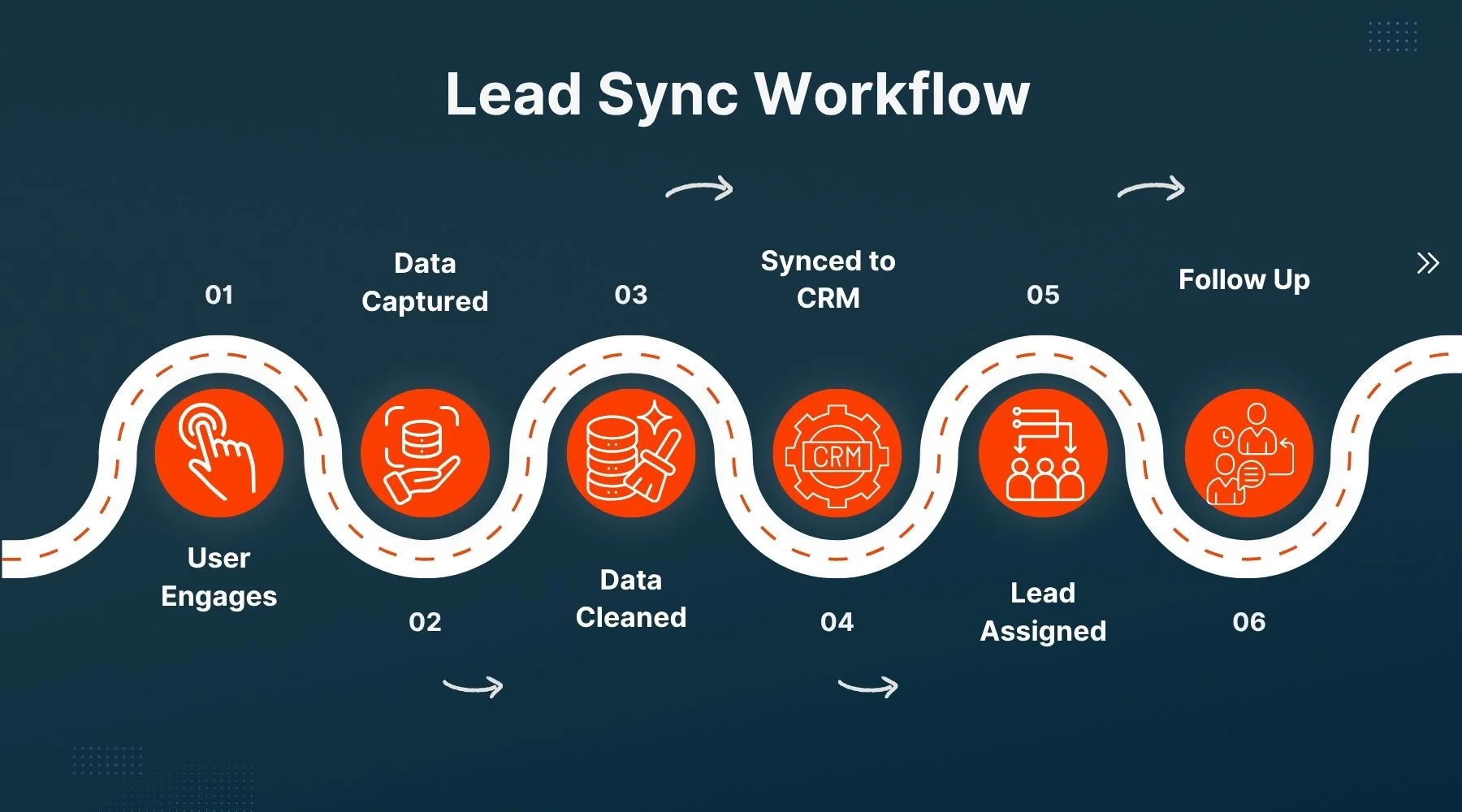
- Capture lead and engagement data: The system detects new leads from forms, ads, landing pages, or email campaigns. It collects user details along with engagement data such as clicks, visits, and interactions.
- Read and organize the data: The AI structures the collected information into a clear format. It ensures that fields such as name, email, company, and source are complete and ready for use.
- Validate and clean the data:The system checks for missing fields, duplicates, or inconsistencies. It corrects formatting issues and ensures that the data is accurate.
- Sync data with the CRM: The AI transfers lead details and engagement history into the CRM system in real time. This ensures that sales teams have immediate access to new leads.
- Update existing records: If the lead already exists, the system updates the record with new activity and information. This keeps the customer profile complete and current.
- Assign lead status and tags: The system categorizes the lead based on source, campaign, and engagement level. It may assign tags such as new lead, warm lead, or high intent.
- Trigger lead scoring or prioritization: The AI can evaluate the lead based on behavior and profile data. It helps identify which leads should be followed up on first.
- Notify the sales team: The system alerts the appropriate sales representative when a new or high-value lead is available. This ensures quick action.
- Enable personalized follow-up: Engagement data is included in the CRM, allowing sales teams to tailor their communication based on the lead’s activity.
- Track performance and attribution: The system records which campaigns generated each lead and tracks outcomes. This helps measure marketing effectiveness and improve strategy.
Outcome
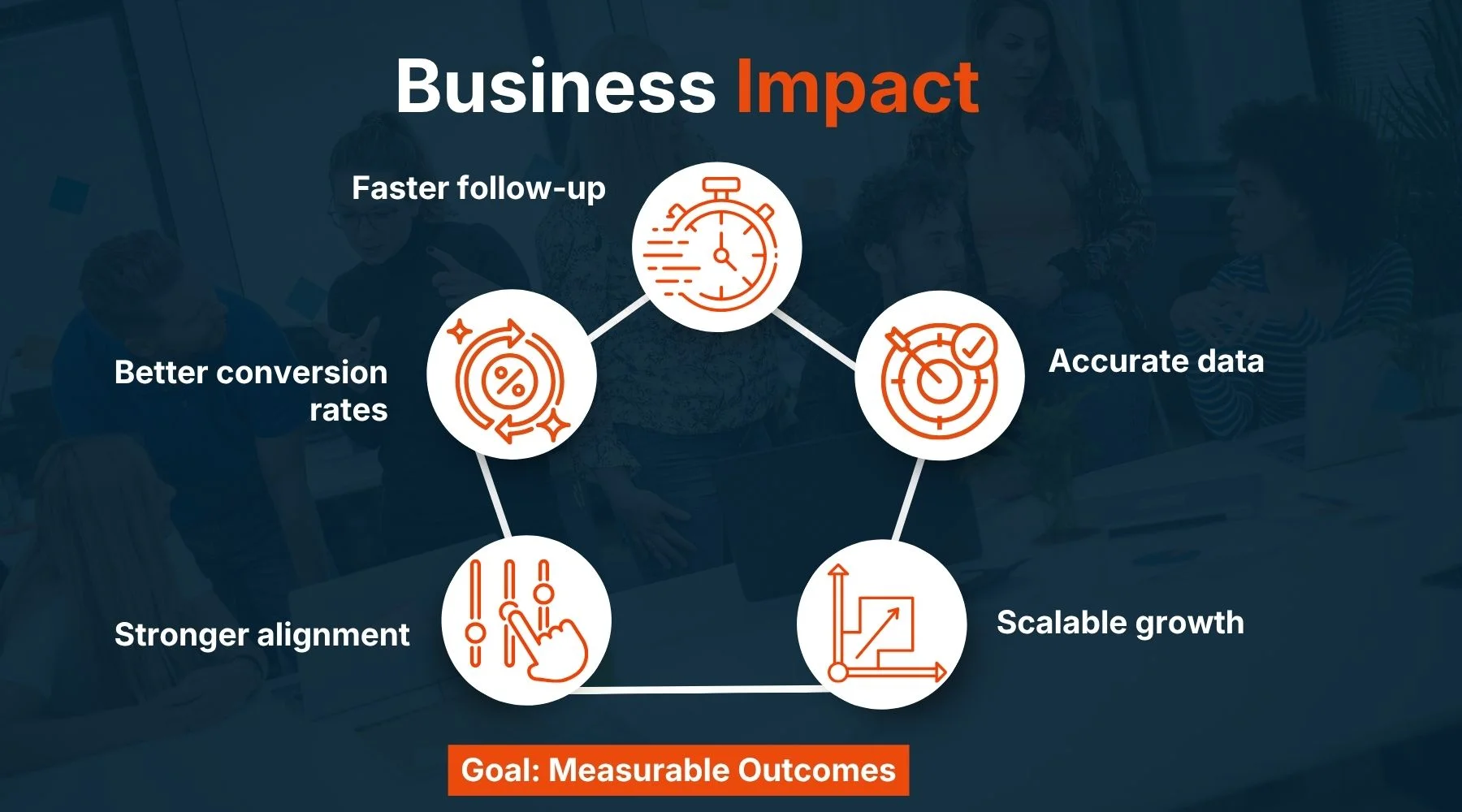
With marketing and sales integration in place, businesses can respond to leads much faster. As soon as a user engages with a campaign or submits a form, their information is available in the CRM. This allows sales teams to follow up quickly while interest is still strong.
Conversion rates improve because leads are handled more efficiently and with better context. Sales teams can see how each lead interacted with marketing campaigns, which helps them tailor their approach and build stronger connections.
Data accuracy also improves across both systems. Since information is synced automatically, there is less risk of missing or incorrect data. This creates a reliable database that supports better decision-making.
Alignment between marketing and sales becomes much stronger. Both teams work with the same data and have clear visibility into lead activity and outcomes. This helps them coordinate efforts and improve overall performance.
Another important outcome is better tracking and reporting. Businesses can see which campaigns generate the most valuable leads and how those leads move through the sales process. This insight helps optimize marketing strategies and increase return on investment.
Over time, the system supports scalable growth. As more leads are generated, the process continues to run smoothly without adding manual effort. This allows businesses to expand their marketing efforts while maintaining efficiency and control.
Lead Sync Workflow
Disconnected vs Integrated Systems
Business Impact
Why Trust This Approach
Marketing and sales integration is built on proven data synchronization and automation technologies that are widely used in modern business systems. These technologies are designed to handle large volumes of data and ensure consistency across platforms.
The system improves over time by learning from lead behavior and conversion patterns. It becomes better at identifying valuable leads and supporting effective follow-up, which increases its impact.
Transparency is a key feature. Every data transfer and update is tracked, allowing teams to understand how information flows between systems. This builds trust and supports better decision-making.
Security and data protection are also built into the process. Lead information is handled carefully, with proper access controls and data management practices.
Many businesses have already adopted this approach and have seen improvements in response time, conversion rates, and overall efficiency. These results show that the solution is practical and effective.
Conclusion
Marketing and sales integration brings two critical functions together into one connected system. It ensures that lead data flows smoothly from generation to conversion without delays or manual effort.
By syncing data automatically, the system improves speed, accuracy, and visibility. Sales teams can act quickly, while marketing teams gain better insight into performance.
The benefits go beyond efficiency. Businesses can build stronger relationships with leads, improve collaboration between teams, and make smarter decisions based on real data.
As marketing efforts grow, having a reliable and scalable integration becomes essentiAI-poweredered systems provide the foundation needed to manage leads effectively and drive better results.
In simple terms, it helps businesses capture leads, respond faster, and convert more opportunities into customers.