HR and Onboarding Integration Use Case
Revolutionizing HR: The Power of AI Integration
Overview
HR and onboarding integration connects employee data with onboarding workflows in one seamless system. Instead of updating multiple tools and coordinating tasks manually, AI ensures that every step begins automatically when a new employee is added.
This AI integration use case explains how AI updates HR systems, assigns onboarding tasks, and manages the full process from start to finish. The goal is to reduce manual coordination, improve consistency, and create a smoother onboarding experience.
The Problem
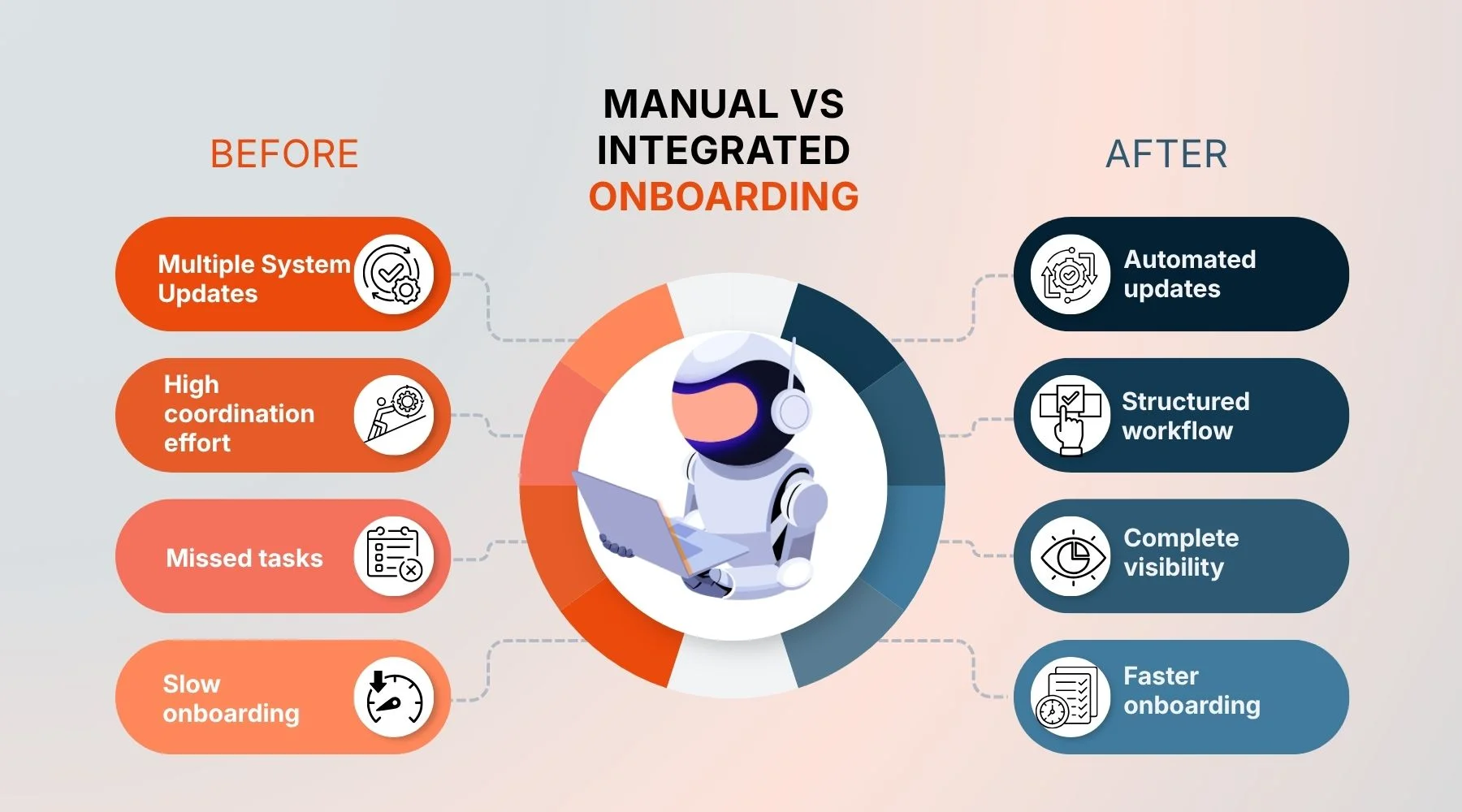
HR teams often manage employee data across multiple systems, such as HR platforms, payroll tools, IT systems, and onboarding workflows. When a new employee joins, their information must be entered and updated in each of these systems. This process takes time and requires careful coordination.
Manual updates increase the risk of errors and delays. Important details such as job role, department, or start date may be entered incorrectly or missed in one system. These inconsistencies can lead to confusion and affect the onboarding experience.
Coordination is another major challenge. HR teams must communicate with IT, managers, and other departments to ensure that tasks such as account setup, equipment allocation, and training are completed. Without a structured system, this process can become slow and disorganized.
Tracking progress is also difficult when tasks are spread across different tools. Teams may not have a clear view of what has been completed and what is still pending. This often leads to repeated follow-ups and delays.
As the organization grows, these issues become harder to manage. More hires mean more data, more tasks, and more coordination. This increases workload for HR teams and reduces efficiency.
The AI Solution
HR and onboarding integration creates a connected workflow that starts automatically when a new employee is added. It ensures that all systems are updated and all tasks are assigned without delay.
Trigger
A new employee is added to the system.
AI Action
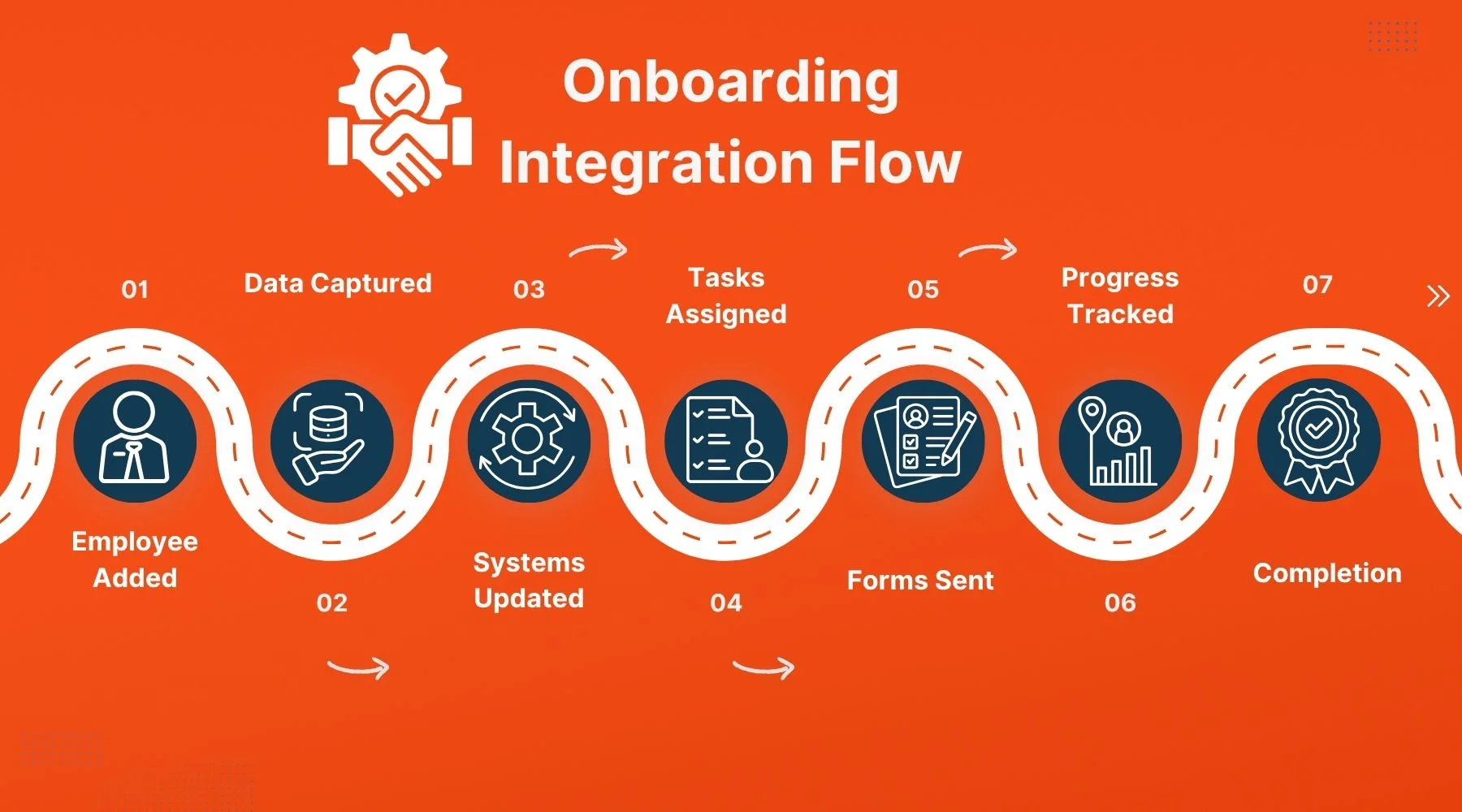
- Capture employee information: The system records key details such as name, role, department, start date, and reporting manager. It ensures that the data is complete and structured.
- Update HR systems: The AI sends employee data to HR platforms, payroll systems, and other relevant tools. This ensures that all systems are aligned from the start.
- Create onboarding workflow: The system selects the appropriate onboarding process based on role or department. It prepares all the required steps for the new hire.
- Assign tasks to teams: Tasks are automatically assigned to HR, IT, and managers. This may include account creation, equipment setup, and training sessions.
- Send onboarding documents and forms: The system delivers contracts, policies, and required forms to the employee. It ensures that all documents are completed on time.
- Set timelines and deadlines: The AI assigns due dates for each task to keep the onboarding process on track.
- Track progress in real time: The system monitors task completion and updates status across all tools. This provides clear visibility for all stakeholders.
- Send reminders and notifications: Automated alerts are sent for pending tasks or upcoming deadlines. This reduces the need for manual follow-ups.
- Sync updates across systems: Any changes in employee data or task status are reflected across all connected platforms. This keeps information consistent.
- Complete onboarding and store records: Once all steps are finished, the system marks onboarding as complete and stores all records for future reference.
Outcome
With HR and onboarding integration in place, the entire onboarding process becomes faster and more organized. As soon as a new employee is added, all systems are updated and tasks are triggered automatically. This removes delays and ensures a smooth start.
Consistency improves because every onboarding follows a structured workflow. All required steps are completed in the correct order, which reduces the risk of missed actions or errors. This creates a reliable and professional onboarding experience.
Manual coordination is reduced significantly. Tasks, updates, and follow-ups are handled by the system, which allows HR teams to focus on employee engagement and support. This improves productivity and reduces workload.
Visibility is also enhanced across the process. Teams can track progress in real time and identify any delays or issues quickly. This helps ensure that onboarding stays on schedule.
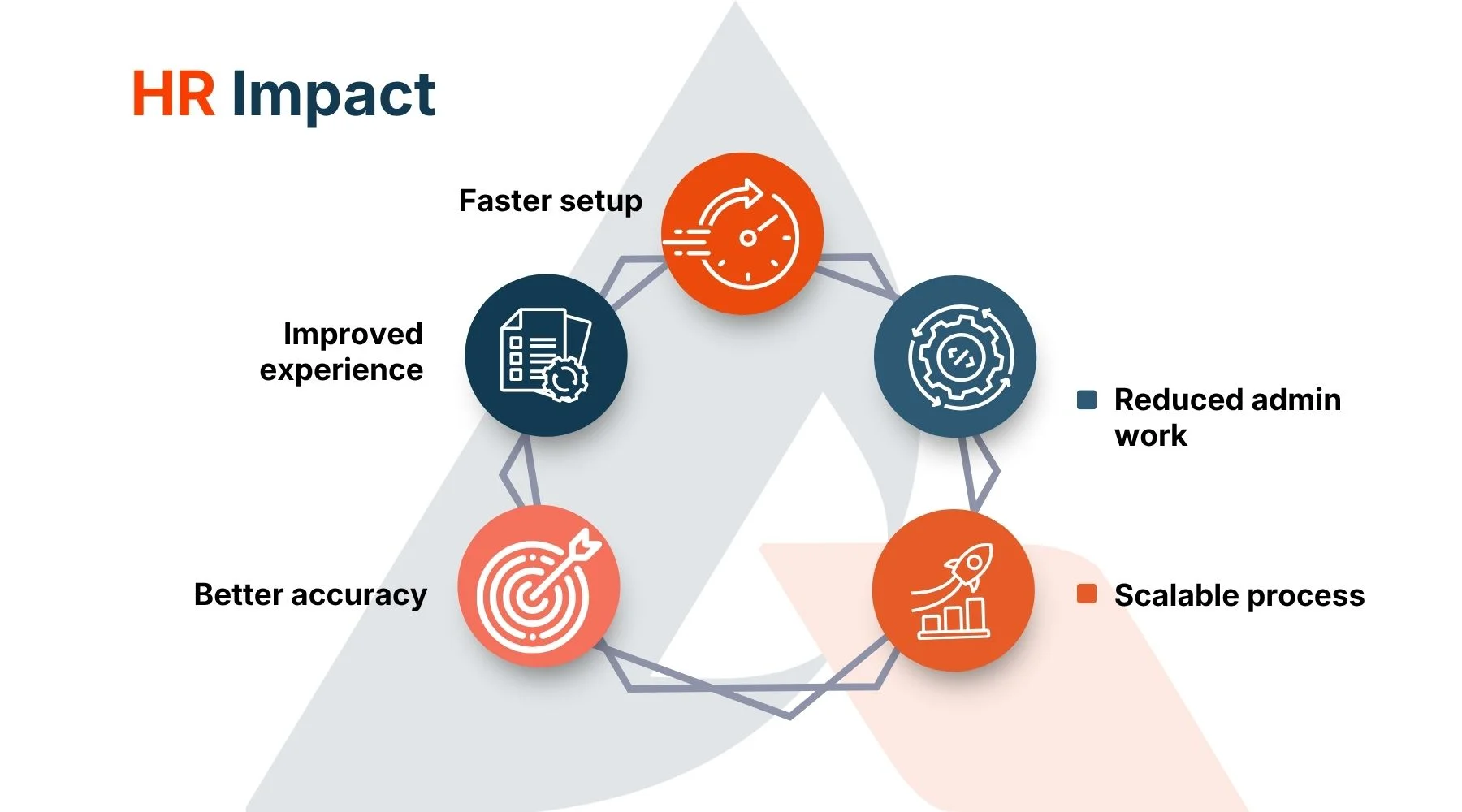
Over time, this leads to better employee experiences and faster productivity. New hires receive the information and resources they need without confusion or delay. This creates a strong foundation for long-term success.
Onboarding Integration Flow
Manual vs Integrated Onboarding
HR Impact
Why Trust This Approach
HR and onboarding integration is built on workflow automation and system integration technologies that are widely used in modern organizations. These systems are designed to manage complex processes with accuracy and consistency.
The system improves over time by learning from onboarding patterns and workflows. It becomes more efficient at assigning tasks and managing timelines, which increases reliability.
Transparency is a key feature. Every step in the onboarding process is tracked and visible, allowing teams to monitor progress and ensure completion. This builds trust and supports better management.
Security and compliance are also built into the system. Employee data is handled carefully, with proper access controls and secure storage.
Many organizations have already adopted this approach and have seen improvements in efficiency, accuracy, and employee satisfaction. These results show that the solution is practical and effective.
Conclusion
HR and onboarding integration transforms a complex and manual process into a smooth and connected workflow. It ensures that every step is handled automatically and in the correct order.
By updating systems, assigning tasks, and tracking progress, the system reduces delays and improves consistency. This helps HR teams deliver a better onboarding experience with less effort.
The benefits go beyond efficiency. Organizations gain better visibility, improved coordination, and stronger employee engagement. This supports long term growth and success.
As hiring needs increase, having a scalable onboarding system becomes essential. AI powered integration provides a reliable solution that keeps processes efficient and well organized.
In simple terms, it helps businesses onboard employees faster, reduce manual work, and create a better experience from day one.